

Learning Experience & Supporting Resources
Learning Experience 1
Duration: 60 minutes
Syllabus links: HS2-HIS-01 = Explains how people lived in the past, how navigation connected the world, and what life was like in the Sydney Cove penal settlement, using sources as evidence, HS2-ACH-01= describes Aboriginal Peoples’ obligations to Country, Culture and Community
Activity sequence =
Focus question: “How are physical artefacts able to tell us stories that may have been left out of written history?”
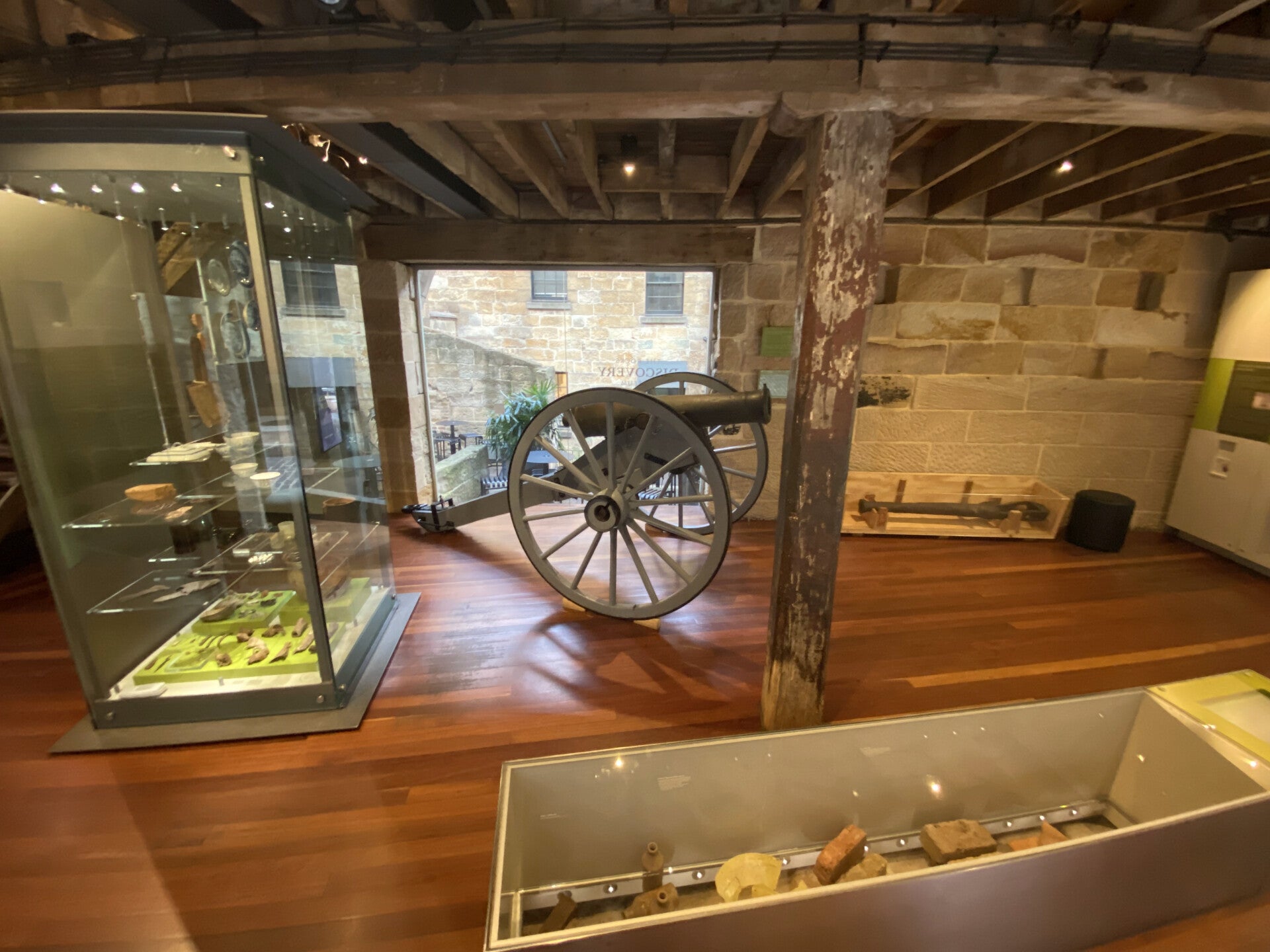
(10 minutes) – On teacher slides, display an unmarked convict artefact (leg shackles) that is housed at The Rocks Discovery Museum. Ask students focus question.
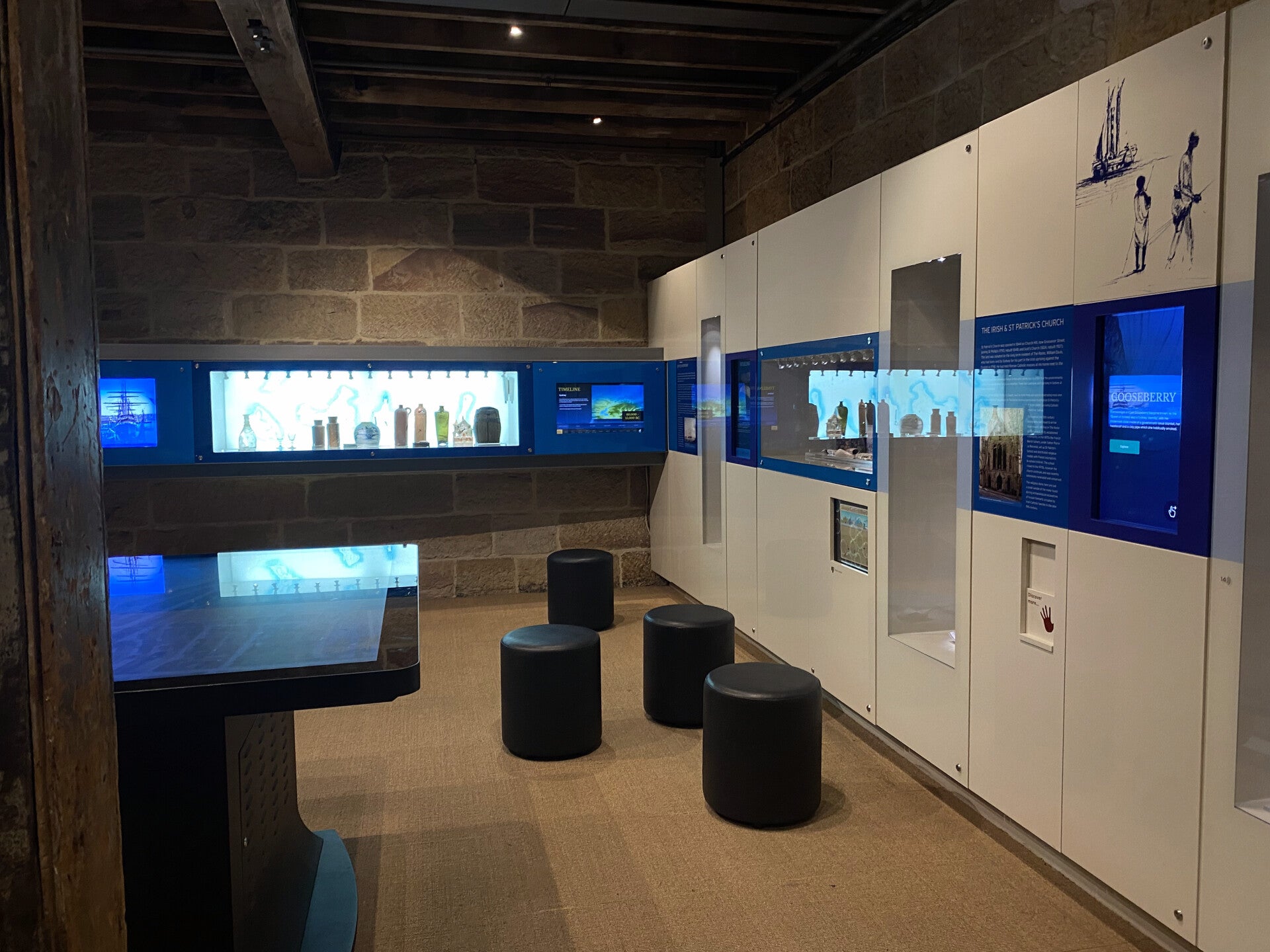
(25 minutes) – Utilising the list of displays at The Rocks Discovery Museum, and if relevant, the virtual museum tour, in pairs, students are to explore and investigate artefacts from the colonial period. Each pair must select a primary source (ceramics, tools, trade objects).
(15 minutes) – Once primary source is selected; students are given an artefact analysis sheet. Students are to record physical features of the artefact, hypothesise the function of artefact, and theorise how the artefact may have been useful in everyday survival during colonial times, or if it was used for punishment, or a way to contact First Nations people as a colonial person.
(10 minutes) – When analysis sheets are finished, pairs must find accurate photographs of their artefact and submit to the teacher for printing. Once printed, the chosen artefacts and analysis sheets are to be displayed on the board as a mock Discovery Museum exhibition.
Additional resources: artefact analysis worksheet, digital artefact reference list (251 words).
Learning Experience 2
Duration: 60 minutes
Syllabus links: HS2-HIS-01 = Explains how people lived in the past, how navigation connected the world, and what life was like in the Sydney Cove penal settlement, using sources as evidence
Activity sequence =
Focus question: “How were working-class families able to live in spaces that are smaller than the carpet in our classroom?”
(10 minutes) – From teacher slides, show archaeological accurate floor plans and pictures of terrace homes from the 1870’s (terrace homes from Foundation Park). Show google map/images of Foundation Park, virtually walk through rooms and ask students to hypothesise living conditions, how many people per house etc.
(25 minutes) – Using tape measures and masking tape, students must use trundle wheels to measure out a to-scale floor plan of an original Foundation Park terrace house (3m x 3m) in the classroom. Students are to then place and fit successfully pre-cut cardboard furniture (bed, table, kitchen hob) within the measured boundaries.
(10 minutes) – Once cardboard furniture is places; students are to step within the taped room in groups of 5-8 to tangibly experience how crowded the colonial living conditions were for a 19th century family.
(5 minutes) – Students are to then complete a comparison chart of living conditions between modern homes and 19th century working-class homes. (They will evaluate light sources, privacy, possible airflow, sanitisation).
(10 minutes) – As a class, reflect and discuss how city living has transformed in Sydney over time and what the physical remains of Foundation Park show us about classes in society.
Additional resources: floor plans of foundation park showing original room layouts (access via City of Sydney archives), living condition comparison chart (267 words).
Resource annotations
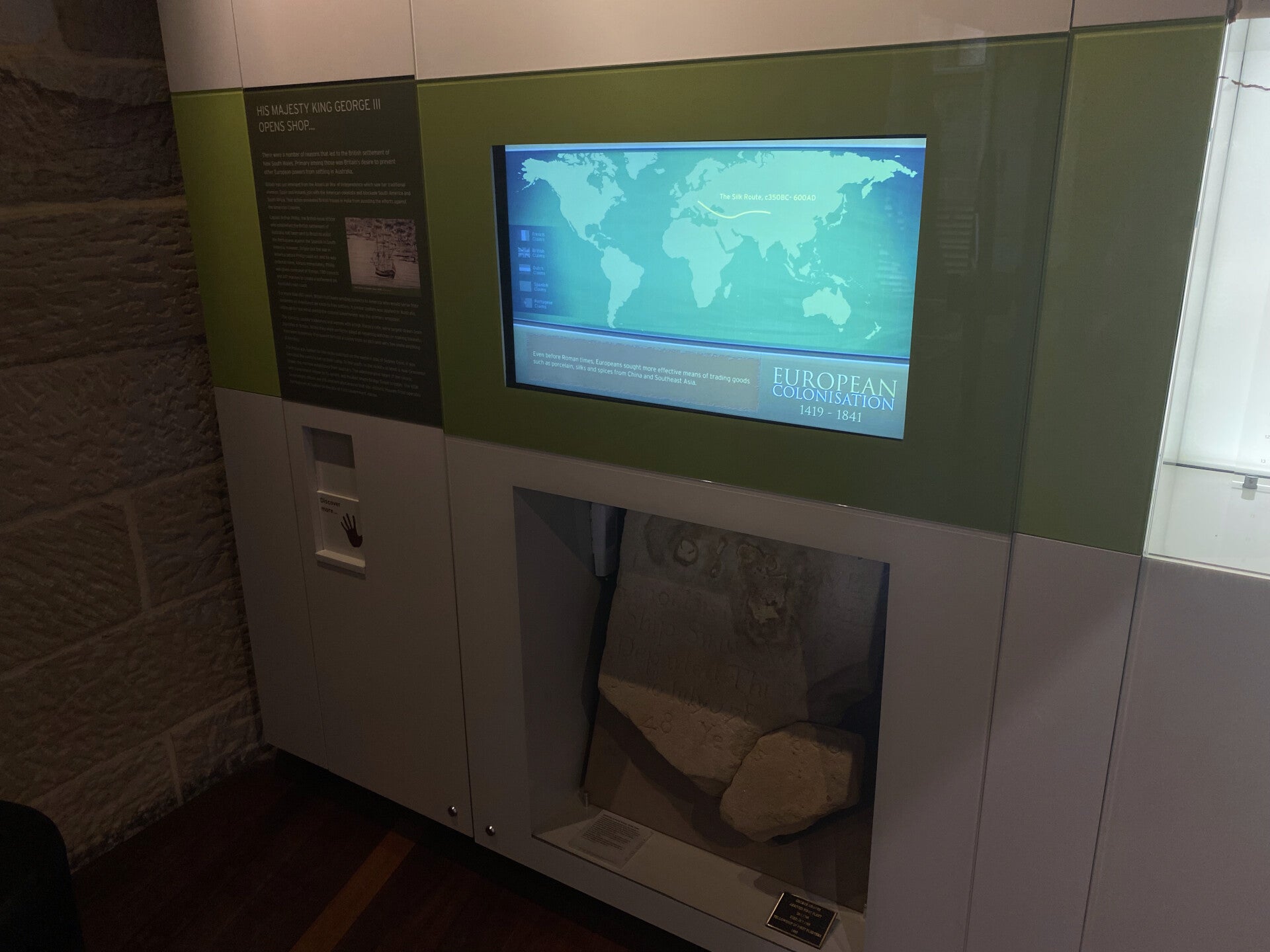
Digital/web (Museum artefact cards)(112 words) - The use of high-quality pictures, physical dimension scale bars, and contextual information from The Rocks Discovery Museum allows teachers to use artefact cards to bring the exhibitions to their classrooms. The use of these cards is highly accessible, especially if location or logistics impede a school from physically attending The Rocks Discovery Museum, with the artefact cards, primary sources are equally able to be accessed within the classroom. The addition of scale bars allows stage 2 students to harness their spatial awareness and tangible understanding of real-life object sizes. Further, the artefact reference list enables teachers to differentiate learning through assigning appropriate artefacts to groups with their varying learning needs and abilities.
Digital/web (Foundation park floor plans) (92 words) - Digital floor plans for Foundation park can be accessed via City of Sydney Archives. These floor plans are authentic 1870’s diagrams that provide accurate insight into how working-class families from colonial times lived which is imperative for classroom reconstruction. Through engaging with archaeological floor plans, stage 2 children can enhance their cross-curricular development in numeracy by interacting with spatial measurement. The plans visually display how homes were built directly into the side of sandstone cliffs which provides students with tangible proof of the high-density housing afforded to working-class families during the environmental transformation of Sydney.
Physical/text/visual (Artefact analysis worksheet) (88 words) - The implementation of a graphic organiser for Stage 2 is essential in guiding their historical inquiry. Through labelling analysis into straightforward, sequential subheadings (observation, inference, historical significance), the scaffold reduces cognitive overload while sustaining children in making claims with evidence to endorse them. The inclusion of check-boxing serves the diverse needs of many learners (EAL/D and growing writers). Additionally, the scaffold links the gap between viewing a primary source and actively evaluating how everyday objects may have been necessary for survival, comradery, punishment and culture in early Sydney.
Physical/text/visual (Living condition comparison chart) (100 words) - This comparative, scaffolded chart allows children to accurately organise their historical concept of change and continuity. With side-by-side columns, the chart explicitly directs stage 2 children in an appropriate manner on how to compare colonial Sydney working-class houses with 21st century modern homes. Through highlighting operational sensory indicators (ventilation, lighting, family size, privacy) the chart can transform theoretical data and information into a real-world, tangible activity, resulting in concrete empathy and understanding. This directly correlates with critical thinking, while aiding learners to investigate how societal class, urban population and density, and technological growth have transformed Australian home life through history.
Create Your Own Website With Webador